Test # 143 [21-Nov-2016]
Login/Register to access massive collection of FREE questions and answers.
Login/Register
Login/Register
Test Index
The three wealthiest families in the world have more assets than the combined wealth of the forty-eight poorest nations .. More >>
What to Eat in Himachal Pradesh
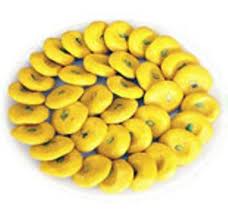
Peda
Peda, Pheda or Pera is a sweet from the Indian subcontinent, usually prepared in thick, semi-soft pieces. The main ingredients are khoa, sugar and traditional flavorings, including cardamom seeds, pistachio nuts and saffron. The colour varies from a creamy white to a caramel colour. The word pera is also generically used to mean a blob of any doughy substance, such as flour or (in the case of the sweet) khoa. Origin of Peda may be credited to the Indian state of Uttar Pradesh, and the variety from the city of Mathura in that state was considered to be the best. Simultaneously, another origin, practice of Peda making, some unique varieties, and spread of this tradition may be attributed to the province of Saurashtra of Gujarat and its centers like Sihor, Rajkot, Palitana and Bhavnagar as well. Tradition and practice of Peda making can be traced back to late 1800s in Sihor while it picking up momentum in 20th century. Along with Rajkot and Bhavnagar now, there are several distinct varieties of Peda, originating from different centres of Saurashtra (region). In Gujarat, Pedas are called and pronounced as Penda